You turn on the tap, fill a glass, and take a drink. But how much do you really know about what’s in your water? For many Ontario homeowners, especially those on a private well, this question is a source of nagging uncertainty. You’ve seen home test kits at the hardware store, and you’ve heard about professional lab services. Making the right choice feels critical, but the path forward isn’t always clear.
This isn’t just about curiosity; it’s about your family’s health, your home’s value, and your peace of mind. Let’s cut through the confusion and compare these options directly, so you can make a confident, informed decision.
Key Takeaways for Busy Homeowners:
- Home Test Kits: Best for quick, non-critical checks like water hardness or chlorine levels. They are not reliable for health-related contaminants and are legally invalid for real estate transactions.
- Public Health Ontario: A crucial and free service for private well owners to test for bacteria (E. coli, coliforms). However, it tells you nothing about chemical contaminants like lead, nitrates, or PFAS.
- Professional Lab Testing: The only way to get a complete, accurate, and legally recognized picture of your water’s safety. It’s essential for identifying heavy metals, chemicals, and other invisible threats, and it’s often required when buying or selling a home.
A Clear Look at Your Water Testing Options in Ontario
Understanding the purpose and limitations of each testing method is the first step. Think of it like a health check-up: you can take your own temperature at home, but you need a doctor for a full physical and blood work.
Option 1: Home Test Kits (The DIY Approach)
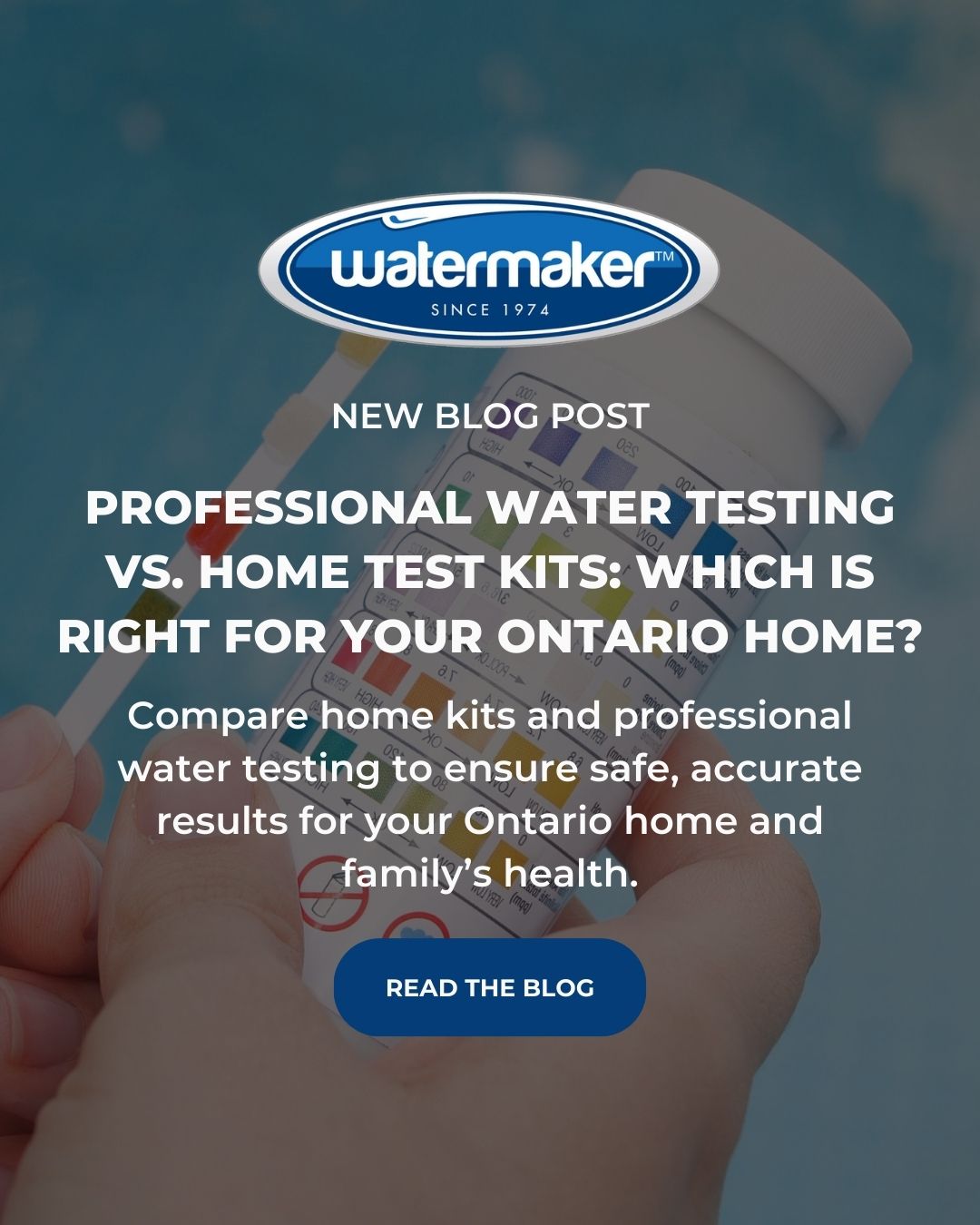
These are the off-the-shelf strips or droppers you can buy online or in stores. They offer instant or near-instant results for a handful of basic parameters.
- What They Test For: Typically limited to pH, total alkalinity, chlorine, and water hardness. Some more expensive kits may test for iron or lead.
- Pros: Inexpensive, fast, and convenient for simple checks.
- Cons (The Critical Part): Their convenience comes at a steep price. Research suggests DIY tests can be highly unreliable, with some studies showing error rates as high as 60%. They lack the sensitivity to detect contaminants at low – but still harmful – levels and are not recognized for any legal or official purpose. They can create a dangerous false sense of security.
Option 2: Public Health Ontario’s Free Well Water Testing
If you have a private well in Ontario, your local Public Health Unit provides free testing for specific bacteria. This is a vital service that every well owner should use regularly.
- What It Tests For: Strictly bacteria – specifically E. coli and total coliforms.
- Pros: It’s an authoritative, free service provided by accredited government labs. It’s the standard for confirming your well water is bacteriologically safe.
- Cons: The Public Health Ontario website itself is clear: a safe bacterial test does not mean your water is free from other contaminants. It provides zero information about chemicals, heavy metals, pesticides, or emerging concerns like PFAS.
Option 3: Professional Lab Testing (The Gold Standard)
This involves having a sample of your water professionally collected and analyzed by an accredited laboratory using sophisticated scientific equipment. This is the service that provides definitive answers.
- What It Tests For: A comprehensive range of potential contaminants, including lead, arsenic, nitrates, pesticides, industrial chemicals, and minerals. Advanced tests can screen for hundreds of compounds.
- Pros: Unmatched accuracy, ability to detect trace contaminants, and legally certified results. The analysis comes from an unbiased, third-party lab, giving you data you can trust.
- Cons: It costs more than a DIY kit and takes several days to get results.
The Deciding Factors: Accuracy, Scope, and Peace of Mind
The choice between a simple test strip and a lab analysis comes down to what you truly need to know. For serious concerns, there’s a clear winner.
Why “Good Enough” Isn’t Good Enough: The Accuracy Gap
The most dangerous contaminants are often tasteless, odourless, and invisible. Home test kits have high “detection limits,” meaning a contaminant must be present in a relatively large amount before the kit can even register it.
A professional lab, however, can detect substances at parts per billion. This precision is critical. The Ontario Drinking Water Quality Standards set strict limits for contaminants like lead, and only a certified lab can confirm if your water meets these legal requirements for safety.
Beyond Bacteria: The Hidden Risks in Ontario’s Water
While bacteria are a major concern for well owners, the chemical story of your water is just as important.
- Lead: Homes built before 1988 have a higher risk of lead solder in their plumbing, which can leach into drinking water. Lead exposure is particularly harmful to children.
- Nitrates: Often found in agricultural areas from fertilizer runoff, high nitrate levels can pose serious health risks to infants.
- PFAS (Per- and Polyfluoroalkyl Substances): Known as “forever chemicals,” these are an emerging concern in Ontario due to their persistence and links to health issues. Home kits cannot detect them.
A professional test is the only way to uncover these hidden threats and ensure your water is truly safe for your family.
High-Stakes Scenarios: When Professional Testing is Non-Negotiable
For some situations, relying on anything less than a certified lab report is not an option.
Buying or Selling a Home
If you’re involved in a real estate transaction with a private well, a “potability certificate” is almost always required. This document proves the water is safe to drink and meets legal standards. Lenders often require this for mortgage approval, and a report from a DIY kit is completely invalid. For this purpose, professional, accredited lab tests are often mandatory to ensure the sale proceeds smoothly and protects both the buyer and seller.
For Families with Health Concerns
If you have young children, elderly family members, or anyone with a compromised immune system in your home, you can’t afford to guess about your water quality. Professional testing provides the certainty needed to protect those most vulnerable.
If You’re on a Private Well
Municipal water is treated and tested regularly according to provincial regulations. If you own a private well, you are the water manager. You bear the full responsibility for ensuring its safety, and that responsibility goes far beyond a simple bacteria check.
Decoding the Costs: An Honest Look at Your Investment
It’s easy to see a $30 test kit and compare it to the higher price of a lab analysis. But this isn’t a true comparison. You’re paying for very different things: a rough estimate versus a certified fact.
Think about the true cost of not testing properly:
- The potential for long-term health issues from undetected contaminants.
- A real estate deal falling through at the last minute.
- Damage to your pipes and appliances from corrosive, untreated water.
When viewed as an investment in your family’s health and your property’s value, professional water testing provides returns that far outweigh the initial cost.
Your Water Testing Questions Answered
Q1. My water looks, tastes, and smells fine. Do I really need to test it?
A1. Yes. Many of the most serious contaminants, including lead, arsenic, nitrates, and PFAS, are completely undetectable by your senses. The only way to know for sure if they are present is through a lab test.
Q2. Can’t I just use the free test from my local health unit?
A2. You absolutely should use the free test for bacteria – it’s a critical part of well ownership. But you must remember its limitation: it tells you nothing about the chemical safety of your water. It’s one piece of a much larger puzzle.
Q3. Are all professional water tests the same?
A3. No. It’s crucial to use a service that partners with labs accredited under standards like CALA ISO/IEC 17025. This accreditation ensures the lab follows rigorous quality control and its results are scientifically valid and legally defensible. At Watermaker, we exclusively use accredited labs to guarantee the integrity of your results.
Q4. What happens after I get my results from a professional test?
A4. A detailed lab report can be intimidating. A key benefit of working with a professional is the expert interpretation that comes with it. We don’t just hand you a sheet of numbers; we help you understand what the results mean and what your options are for addressing any issues that are found, ensuring you have a clear path to safe, clean water.
The Confident Choice for Your Home and Family
Making decisions about your water shouldn’t be a guessing game. While DIY kits have a place for minor checks, they fall short where it matters most: your health and safety.
By investing in professional, lab-certified water analysis, you are choosing certainty over chance. You’re getting an unbiased, comprehensive, and accurate report on your water quality, backed by scientific data. This is the foundation for true peace of mind and the first step toward the right water treatment solution for your home.
Ready to get definitive answers about your water? Schedule your professional water analysis today and take the guesswork out of your family’s health.